The Silent Revolution in Home Design
Imagine walking into a living room that seamlessly transforms from a serene workspace to an entertainment hub within minutes. Picture a compact apartment where every piece of furniture serves multiple, indispensable roles, defying the constraints of limited square footage. This isn’t a futuristic fantasy; it’s the tangible reality enabled by the intelligent application of multifunction furniture. In an era where urban living increasingly demands adaptability and efficiency, the principles of maximizing utility within a confined footprint have moved from niche innovation to an essential design philosophy. Homeowners and renters alike are seeking sophisticated solutions that blend aesthetics with unparalleled practicality, eschewing the clutter of single-purpose items for the elegance of versatility.
- The Silent Revolution in Home Design
- The Core Philosophy: Adaptability as an Architectural Principle
- Unveiling Ingenious Multifunction Furniture Categories
- Sleeping Solutions That Disappear
- Seating and Storage Intertwined
- Tables That Transform
- Storage That Serves More Than One Purpose
- Expert Design Strategies for Maximizing Space
- Selecting the Right Multifunction Furniture for Your Home
- Assessing Your Needs and Lifestyle
- Quality and Durability: An Investment in Longevity
- Aesthetic Integration: Blending Form and Function
- DIY Multifunction Furniture: Empowering Your Creativity
- The Appeal of Customization and Cost Savings
- Essential DIY Multifunction Furniture Projects
- Key Considerations for DIY Success
- The Future of Multifunction Furniture: Smart Integration and Sustainability
- Frequently Asked Questions
- What are the main benefits of using multifunction furniture?
- How can I ensure multifunction furniture is comfortable for its primary function?
- Are there specific types of multifunction furniture best suited for small apartments?
- What is the typical lifespan of multifunction furniture compared to single-purpose furniture?
- How can I maintain multifunction furniture to ensure its longevity?
- Final Recommendations for a Smarter Home
Multifunctional furniture — Wikipedia
The burgeoning popularity of multifunction furniture isn’t merely a trend; it’s a direct response to evolving living patterns and economic realities. As living spaces shrink and the desire for organized, decluttered environments grows, the demand for furniture that performs double, triple, or even quadruple duty has surged. This shift reflects a deeper understanding of spatial economics and a growing appreciation for design that actively enhances quality of life. Expert designers and savvy homeowners are recognizing that thoughtfully chosen, adaptable pieces can dramatically elevate the functionality and perceived size of any room, proving that even the smallest dwelling can feel expansive and sophisticated.
The true genius of multifunction furniture lies not just in saving space, but in creating dynamic environments that adapt to our lives, rather than forcing our lives to adapt to static spaces.
This comprehensive guide explore the expert strategies and design principles behind mastering your space with multifunction furniture. We will explore the core concepts, showcase ingenious examples, and provide actionable advice for selecting and integrating these transformative pieces into your home, ensuring your living environment is as intelligent and adaptable as your lifestyle.
The Core Philosophy: Adaptability as an Architectural Principle
At its heart, multifunction furniture embodies a design philosophy centered on adaptability and intelligent resource utilization. It’s about challenging the conventional notion that a piece of furniture should serve a singular purpose. Instead, it champions the idea of dynamic utility, where objects are designed to fluidly transition between roles, thereby optimizing the use of available space. This approach acknowledges that modern living is rarely static; our needs change throughout the day, week, and year, and our homes should ideally be able to accommodate these shifts with grace and efficiency.
When it comes to multifunction furniture, This philosophy extends beyond mere space-saving. It’s about creating environments that are more responsive to individual needs and activities. A dining table that folds away to reveal a desk, a sofa that conceals a fully functional bed, or a coffee table that lifts to become a workstation – these are not just clever gadgets, but manifestations of a design ethos that prioritizes user experience and spatial liberation. The objective is to imbue a home with a sense of fluidity, allowing it to be a sanctuary, a workspace, a social hub, and a personal retreat, all within the same physical boundaries.
Unveiling Ingenious Multifunction Furniture Categories
The landscape of multifunction furniture is vast and continuously evolving, offering innovative solutions for every room and need. Understanding the key categories can help homeowners identify the most impactful pieces for their specific living situations. These categories often overlap, highlighting the inherent versatility of well-designed multifunctional items.
Sleeping Solutions That Disappear
Perhaps the most celebrated category of multifunction furniture involves sleeping arrangements that can be discreetly stored.
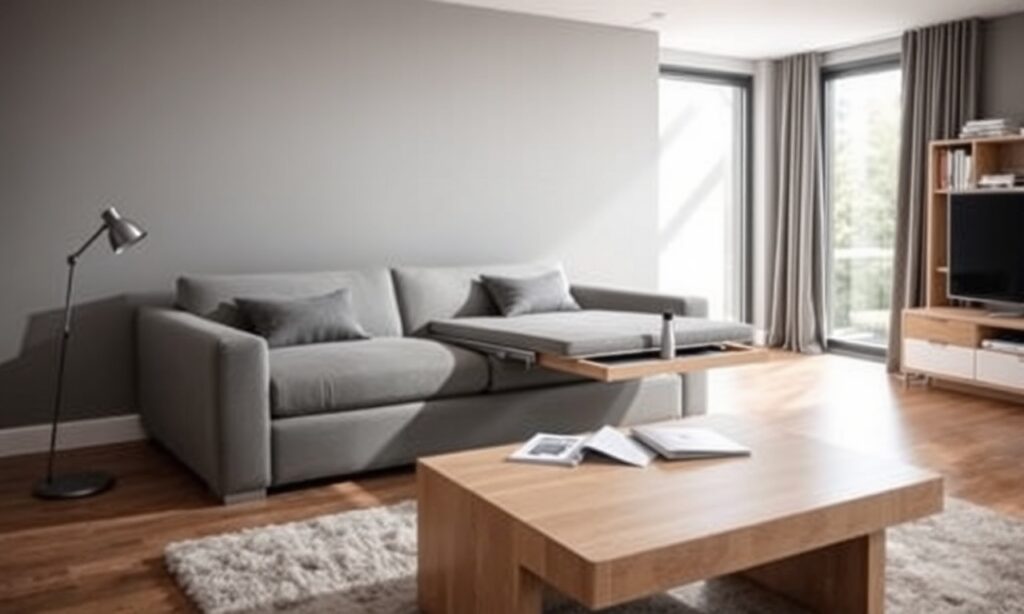
- Sofa Beds: The quintessential example, modern sofa beds have evolved dramatically from their often uncomfortable predecessors. Contemporary designs feature advanced mechanisms, high-quality mattresses, and stylish upholstery, offering genuine comfort for nightly use without compromising the living room’s aesthetic during the day. Many also incorporate valuable storage space beneath the seating cushions.
- Murphy Beds (Wall Beds): These ingenious beds fold vertically into a cabinet or wall unit, freeing up significant floor space when not in use. Integrated cabinetry can provide shelving and storage, making them a complete bedroom solution for studio apartments or guest rooms. Recent advancements include models with integrated desks or sofas that remain accessible when the bed is deployed.
- Daybeds: Combining the comfort of a sofa with the function of a bed, daybeds are ideal for multi-use spaces like home offices or guest rooms. They often feature built-in storage drawers or trundle beds for accommodating overnight guests without requiring dedicated bedroom space.
Seating and Storage Intertwined
Seating furniture has long been a prime candidate for multifunctional design, integrating storage and other practical features seamlessly.
- Ottomans and Storage Benches: Beyond their role as footrests or extra seating, these pieces are masters of disguise. Lift-top ottomans reveal ample hidden storage for blankets, games, or remote controls. Benches, particularly those designed for entryways or at the foot of beds, often feature drawers or lift-up seats, providing essential organization for frequently used items.
- Sectional Sofas with Storage: Many modern sectional sofas now incorporate chaise lounges with lift-up storage compartments, perfect for stowing away bedding, seasonal decor, or toys. Some even feature modular designs that can be reconfigured into various layouts or include built-in side tables or charging ports.
- Nesting Chairs: While less common, nesting chairs offer a clever solution for occasional seating needs. A set of chairs can be neatly stacked and stored, often within a larger piece like a footstool or a slim cabinet, to be pulled out only when extra guests arrive.
Tables That Transform
Tables, often central to a room’s functionality, are ripe for transformation, offering versatility in dining, working, and entertaining.
- Lift-Top Coffee Tables: These tables are a cornerstone of modern multifunctional living. They can serve as a traditional coffee table, then easily transform into a higher surface for dining, working on a laptop, or engaging in hobbies. Many models include hidden storage compartments within their base.
- Extendable Dining Tables: These tables are designed to expand to accommodate more guests, typically via a leaf mechanism. They are ideal for smaller dining areas, allowing for intimate family meals and easily scaling up for entertaining without permanently occupying a large footprint.
- Wall-Mounted Folding Tables: For extremely compact spaces, wall-mounted tables that fold up against the wall when not in use are invaluable. They can serve as a dining surface, a desk, or a temporary workspace, disappearing completely when their function is no longer needed.
Storage That Serves More Than One Purpose
Beyond dedicated storage units, many furniture items cleverly integrate storage to enhance their primary function.
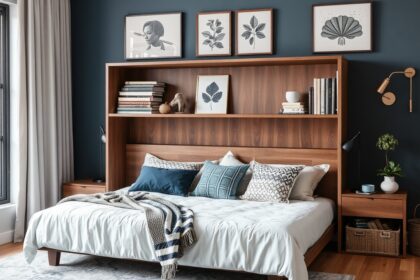
- Beds with Built-in Drawers or Storage Headboards: Platform beds with integrated drawers offer substantial storage without requiring additional furniture. Headboards with shelving or cabinets provide convenient bedside storage for books, electronics, and personal items, reducing the need for separate nightstands.
- Desks with Integrated Shelving or Cabinets: Home office desks that include built-in shelving units or cabinets help keep work essentials organized and within reach. Some designs even incorporate fold-out extensions or hidden compartments for a cleaner workspace when not in use.
Expert Design Strategies for Maximizing Space
Implementing multifunction furniture effectively requires more than just purchasing versatile pieces; it demands a strategic approach to design and layout. Expert designers employ several key principles to ensure these pieces not only function well but also contribute to a cohesive and aesthetically pleasing environment.
The Art of Layering Functionality
The most successful applications of multifunction furniture involve layering different functions within a single space. This means thinking about how a room can serve multiple purposes throughout the day or week. For instance, a living room might transition from a family lounge during the day to a guest bedroom at night. This requires furniture that can be easily reconfigured or concealed. A modular sofa that can be rearranged, combined with a sofa bed, and complemented by nesting side tables that can be stacked away, allows for this seamless transition. The key is to ensure that the reconfiguration process is intuitive and doesn’t require excessive effort.
Consider a home office that doubles as a guest room. A Murphy bed integrated into a wall unit that also houses bookshelves and a desk can create a fully functional workspace during the day and a comfortable sleeping area at night. The desk surface might even fold down in front of the bed, or a sofa might be incorporated into the unit, which then retracts with the bed. This layered approach transforms a single room into a dynamic, adaptable environment, proving that small spaces can indeed accommodate diverse needs.
Visual Harmony and Cohesion
While functionality is paramount, the aesthetic appeal of multifunction furniture should not be overlooked. Expert designers ensure that versatile pieces integrate seamlessly with the overall decor. This often involves selecting pieces with clean lines, neutral color palettes, and high-quality materials that can complement a variety of interior styles. The goal is for the furniture’s adaptability to be a subtle enhancement, rather than an obvious compromise on design.
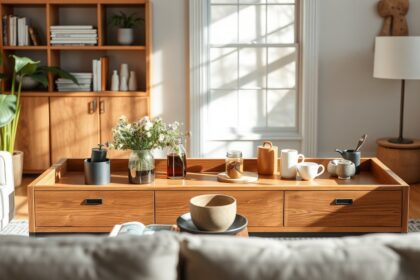
For example, a storage ottoman upholstered in a fabric that matches the sofa can provide both extra seating and hidden storage without appearing out of place. Similarly, a lift-top coffee table with a sophisticated wood finish can function as a stylish centerpiece in a living room, its hidden capabilities only apparent when needed. The trick is to avoid pieces that look overtly utilitarian or “convertible” in a way that detracts from the room’s ambiance. When pieces are well-chosen and integrated, the multifunctionality becomes an elegant solution rather than a visual distraction.
The Power of Vertical Space
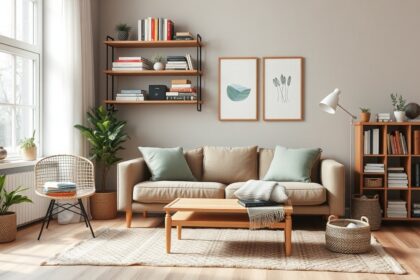
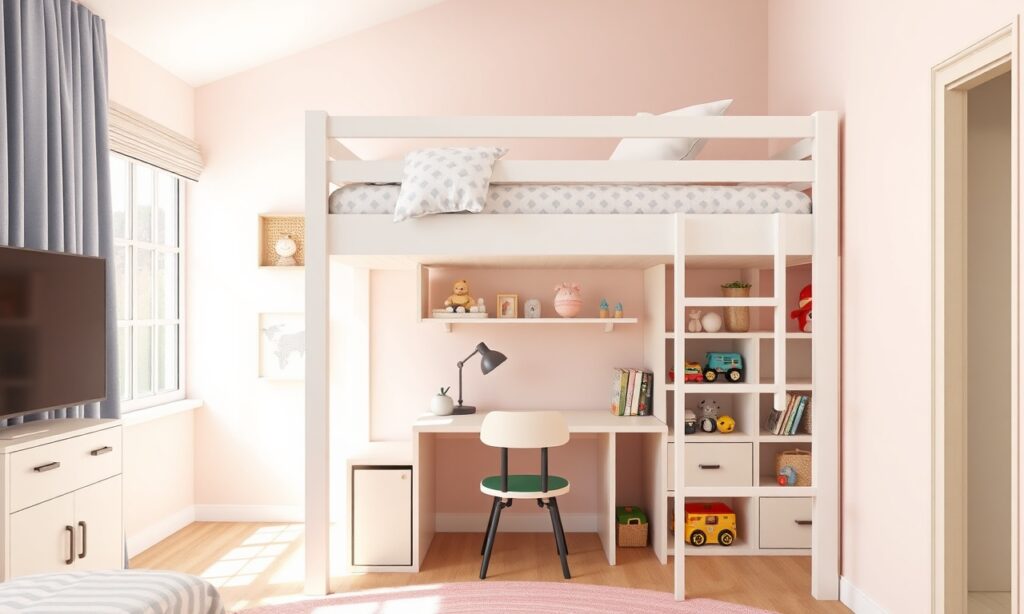
When floor space is limited, looking upwards becomes a critical strategy. Multifunction furniture often leverages vertical space through integrated shelving, wall units, and loft beds. These solutions not only provide storage and sleeping areas but can also redefine a room’s layout and visual appeal.
Wall-mounted shelving units can serve as bookshelves, display areas, and even integrated desks or entertainment centers. Loft beds, which elevate the sleeping area, create valuable usable space underneath for a desk, a seating area, or additional storage. These vertical solutions are particularly effective in children’s rooms, studio apartments, and small bedrooms, maximizing utility without encroaching on the central living area. The careful arrangement of these vertical elements can create a sense of depth and openness, making even the most compact rooms feel more spacious and organized.
Selecting the Right Multifunction Furniture for Your Home
The sheer variety of multifunction furniture available can be overwhelming. Making informed choices requires an understanding of your specific needs, the dimensions of your space, and the quality of the products.
Assessing Your Needs and Lifestyle
The first step in selecting multifunction furniture is a thorough assessment of your household’s unique requirements.
- Identify Primary vs. Secondary Functions: What is the main purpose of the furniture? For example, is a sofa primarily for lounging, with sleeping being a secondary function (sofa bed), or is it the other way around? This helps prioritize quality and comfort in the primary function.
- Consider Daily vs. Occasional Use: Will the furniture be used daily for its secondary function (e.g., a sofa bed for a permanent sleeping arrangement) or only occasionally (e.g., a folding table for guests)? This impacts the durability and mechanism requirements.
- Evaluate User Habits: How often will the furniture be converted? If it needs frequent transformation, ease of operation is paramount. For example, a complex mechanism might be unsuitable for an elderly person or for quick daily transitions.
- Analyze Space Constraints: Measure your available space precisely, considering not only the furniture’s footprint when deployed but also the clearance needed for conversion and movement around it.
Quality and Durability: An Investment in Longevity
When investing in multifunction furniture, quality and durability are paramount. Because these pieces are often subjected to more frequent use and mechanical stress than single-purpose furniture, their construction needs to be robust.
- Mechanisms: Examine the conversion mechanisms. Are they smooth, sturdy, and easy to operate? Look for steel frames and well-engineered hinges. For sofa beds, check the mattress support system.
- Materials: Opt for solid wood frames, high-density foam, and durable upholstery fabrics. For metal components, ensure they are rust-resistant and well-finished.
- Construction: Look for strong joinery techniques, such as dovetailing or mortise and tenon, rather than simple glue and staples, especially in wooden components.
Aesthetic Integration: Blending Form and Function
Ensuring your multifunction furniture complements your existing decor is crucial for creating a harmonious living space.
- Style Consistency: Choose pieces that align with your overall interior design style, whether it’s modern, minimalist, traditional, or eclectic. Many manufacturers offer multifunctional designs in various aesthetics.
- Color and Material Coordination: Select colors and materials that either blend in seamlessly with your existing palette or act as a deliberate accent piece. Consider how the furniture will look in both its primary and secondary configurations.
- Proportion and Scale: Ensure the furniture is appropriately scaled for your room. An oversized sofa bed can overwhelm a small living room, while a too-small folding table might be impractical for entertaining.
DIY Multifunction Furniture: Empowering Your Creativity
For the more hands-on individual, the world of DIY multifunction furniture offers an exciting avenue to create bespoke solutions perfectly tailored to specific needs and spaces. This approach not only allows for unparalleled customization but can also be a cost-effective way to achieve high-end functionality.
The Appeal of Customization and Cost Savings
DIY projects provide the ultimate flexibility. You can design a piece that fits an exact nook, incorporates specific storage requirements, or matches a very particular aesthetic. This level of personalization is often unattainable with off-the-shelf furniture. Furthermore, by sourcing materials yourself and investing your own labor, you can often achieve a higher quality piece for a fraction of the cost of a professionally manufactured equivalent. This empowers homeowners to be creators, not just consumers, of their living environments.
Essential DIY Multifunction Furniture Projects
Several popular DIY projects exemplify the principles of multifunction furniture.
- DIY Storage Ottomans: A simple yet highly effective project. You can build a sturdy wooden box, add hinges for a lift-top lid, and then upholster it with fabric or faux leather, adding casters for mobility. These can be customized to any size and used for storing blankets, toys, or books.
- Fold-Down Wall Desk: This project involves attaching a hinged wooden panel to a wall stud. When closed, it resembles a cabinet or shelf. When opened, it reveals a functional desk surface, often with built-in shelving or cubbies for stationery and a laptop. These are perfect for small home offices or crafting nooks.
- Pallet Wood Coffee Table with Hidden Storage: Repurposing wooden pallets can lead to rustic and charming coffee tables. By adding a lift-top mechanism and creating a hollow interior, these tables can provide ample storage while serving as a central piece in a living room.
- Modular Shelving Units: Building modular shelving systems allows for incredible adaptability. These units can be configured in various ways to serve as bookshelves, media consoles, room dividers, or even integrated into a larger storage wall. Adding wheels or removable sections enhances their multifunctionality.
Key Considerations for DIY Success
Embarking on a DIY multifunction furniture project requires careful planning and execution.
- Accurate Measurements: Precision is critical. Measure your space multiple times and create detailed plans before cutting any materials.
- Material Selection: Choose materials that are durable, appropriate for the intended use, and within your budget. Consider the weight and structural integrity required.
- Tool Proficiency: Ensure you have the necessary tools and know how to use them safely. If a particular tool is required for a crucial step, it might be worth renting it.
- Safety First: Always prioritize safety. Wear appropriate protective gear, work in a well-ventilated area, and be mindful of power tool usage.
- Finishing Touches: Don’t neglect the finishing. Sanding, painting, staining, and adding hardware can elevate a DIY project from basic to professional-looking.
The Future of Multifunction Furniture: Smart Integration and Sustainability
The evolution of multifunction furniture is far from over. Emerging trends point towards greater integration of smart technology and a stronger emphasis on sustainable design.
Smart Technology Integration
The concept of the “smart home” is increasingly extending to furniture. We are beginning to see multifunction furniture with integrated features such as:
- Built-in Wireless Charging: Coffee tables, end tables, and desks are incorporating wireless charging pads for phones and other devices, reducing cable clutter.
- Integrated Lighting: Bedside tables, headboards, and desks are featuring subtle LED lighting for reading or ambiance.
- USB Ports and Power Outlets: Many multifunctional pieces now include easily accessible USB ports and power outlets, turning them into convenient charging stations.
- App-Controlled Adjustments: While still niche, some advanced pieces are exploring app-controlled height adjustments for desks or even integrated entertainment systems.
This integration aims to enhance convenience and further streamline living spaces by embedding technology seamlessly into the furniture itself.
Sustainability and Eco-Conscious Design
As environmental awareness grows, so does the demand for sustainable multifunction furniture. This involves:
- Recycled and Reclaimed Materials: Manufacturers are increasingly using recycled plastics, reclaimed wood, and other eco-friendly materials in their designs.
- Durable Construction for Longevity: Creating pieces that are built to last reduces the need for frequent replacements, thereby minimizing waste. This aligns perfectly with the inherent value of well-made multifunctional items.
- Modular and Repairable Designs: Furniture designed with modular components that can be easily replaced or repaired extends its lifespan and reduces its environmental footprint.
The future likely holds a fusion of intelligent technology and ecological responsibility, creating furniture that is not only adaptable and space-saving but also environmentally conscious.
Frequently Asked Questions
What are the main benefits of using multifunction furniture?
The primary benefit of multifunction furniture is its ability to maximize space utilization, making it ideal for smaller homes, apartments, or any area where efficient use of square footage is crucial. It allows rooms to serve multiple purposes, offering flexibility and adaptability to changing needs throughout the day. Furthermore, it can help reduce clutter, create a more organized living environment, and potentially save costs by replacing multiple single-purpose items with one versatile piece.
How can I ensure multifunction furniture is comfortable for its primary function?
When selecting multifunction furniture, it’s essential to prioritize the comfort of its primary function. For a sofa bed, this means testing the mattress and the seating comfort. For a desk that converts from a coffee table, ensure the elevated desk surface is at an ergonomic height. Always read reviews, examine specifications, and, if possible, try out the furniture before purchasing to ensure it meets your comfort expectations for its main use.
Are there specific types of multifunction furniture best suited for small apartments?
Absolutely. For small apartments, multifunction furniture like sofa beds, Murphy beds, wall-mounted folding desks and tables, lift-top coffee tables, and ottomans with hidden storage are exceptionally well-suited. These items are designed to conserve space and often disappear or transform when not in use, making them invaluable for maximizing limited living areas. Modular pieces that can be reconfigured are also excellent choices.
What is the typical lifespan of multifunction furniture compared to single-purpose furniture?
The lifespan of multifunction furniture can vary significantly based on its quality, materials, and how it is used. High-quality pieces with robust mechanisms and durable construction can last for many years, often comparable to single-purpose furniture. However, because they are subjected to more mechanical stress from conversion, lower-quality items may have a shorter lifespan. Investing in well-made, reputable brands is key to ensuring longevity.
How can I maintain multifunction furniture to ensure its longevity?
Regular maintenance is crucial. For sofa beds, ensure the mechanism is kept clean and lubricated if recommended by the manufacturer. Upholstery should be cleaned according to fabric care instructions. For folding tables and desks, check that hinges and locking mechanisms remain secure and function smoothly. Periodically inspect all screws and joints for tightness. Addressing minor issues promptly can prevent them from becoming major problems.
Final Recommendations for a Smarter Home
Embracing multifunction furniture is more than just a design choice; it’s a lifestyle upgrade. It’s about living smarter, not just in a larger space, but in a more adaptable and responsive environment. By carefully considering your needs, prioritizing quality, and integrating pieces thoughtfully, you can unlock the full potential of your home, transforming it into a dynamic, efficient, and beautiful sanctuary. Whether you opt for expertly crafted pieces or roll up your sleeves for a DIY project, the principles of multifunctionality offer a powerful pathway to mastering your space and enhancing your daily living experience.
See also: multifunction furniture