The Silent Struggle for Space: Why Convertible Furniture Is No Longer a Niche Solution
In the relentless pursuit of urban living and increasingly compact homes, the humble dwelling is often stretched to its absolute limits. The average apartment size in major global cities has been shrinking for decades, forcing residents into a constant, often frustrating, battle against spatial constraints. Research indicates that the median size of new homes in many developed countries has decreased over recent years, a trend mirrored globally and amplifying the need for smarter, more adaptable living solutions. For too long, the concept of maximizing space was synonymous with ruthless decluttering or settling for cramped, multi-functional rooms that felt perpetually unfinished. However, a quiet revolution has been underway, spearheaded by the unassuming yet profoundly impactful category of convertible furniture.
- The Silent Struggle for Space: Why Convertible Furniture Is No Longer a Niche Solution
- The Multifaceted Marvels: Unpacking the Core Benefits of Convertible Furniture
- Navigating the Spectrum: A close look into Convertible Furniture Categories
- The Versatile Sofa Bed: Beyond the Guest Room Staple
- The Transformative Table: From Coffee to Dining and Beyond
- The Space-Saving Storage Solutions: Shelving That Does More
- 💡 Expert Insight Expert Insight: The “Hidden” Functionality is Key
- The Art of Selection: Choosing Convertible Furniture That Truly Works for You
- Integrating Convertible Furniture: Tips for Seamless Design and Functionality
- The Future of Living: How Convertible Furniture is Shaping Modern Homes
- Key Takeaways
- Frequently Asked Questions
- What is the most important factor to consider when buying convertible furniture?
- Are convertible furniture pieces generally less comfortable than traditional furniture?
- How do I choose the right size and style of convertible furniture for my home?
- Is convertible furniture a good investment for small apartments?
- What kind of maintenance does convertible furniture require?
- Final Recommendations
Once relegated to studio apartments and dorm rooms, these ingenious pieces are now a cornerstone of modern interior design, offering sophisticated, seamless transitions that unlock hidden potential in even the most modest of homes. This isn’t merely about squeezing more items into a smaller footprint; it’s about intelligent design that adapts to your lifestyle, transforming rooms from day to night, from work to leisure, with an elegance that belies their practical origins.
Convertible furniture isn’t just about saving space; it’s about reclaiming your life from the tyranny of cramped quarters, enabling dynamic living in every square foot.
The allure of convertible furniture lies in its inherent duality, its ability to serve multiple purposes without compromising on aesthetics or comfort. It’s proof of innovative engineering and thoughtful design, born from a deep understanding of how people actually live. From sofa beds that redefine guest accommodation to modular shelving that morphs into desks, these pieces are engineered to be more than just furniture; they are architects of your living environment. This guide aims to demystify the world of convertible furniture, offering a comprehensive, honest assessment of its benefits, the diverse array of options available, and practical advice on selecting pieces that truly enhance your home and lifestyle.
We will explore the nuances of quality, functionality, and style, empowering you to make informed decisions that will transform your living space from a constraint into a canvas of possibility.
The Multifaceted Marvels: Unpacking the Core Benefits of Convertible Furniture
The primary driver behind the surge in popularity of convertible furniture is its unparalleled ability to address the fundamental challenge of limited space. However, the advantages extend far beyond mere spatial efficiency, touching upon aspects of cost-effectiveness, sustainability, and enhanced lifestyle. Understanding these multifaceted benefits is crucial to appreciating the true value proposition of these dynamic pieces.
One of the most significant, yet often overlooked, benefits is cost-effectiveness. When you invest in a piece of convertible furniture, you are essentially acquiring multiple functions for the price of one. A high-quality sofa bed, for instance, eliminates the need for a separate guest room and its associated furnishings – bed, dresser, nightstand, and potentially even a desk. Similarly, a coffee table that lifts and extends into a dining table negates the requirement for a dedicated dining set, particularly beneficial in open-plan living areas. This consolidation of purpose leads to substantial savings on initial purchase costs, as well as ongoing expenses such as heating and cooling, as fewer distinct zones need to be climate-controlled.
Home décor industry insights consistently suggest that multi-functional furniture can reduce overall furnishing costs by up to 30% for smaller living spaces.
Beyond the financial implications, sustainability and environmental consciousness are increasingly influencing consumer choices, and convertible furniture aligns perfectly with these values. By consolidating multiple furniture items into one, consumers reduce their overall consumption of raw materials, manufacturing energy, and transportation emissions. A single well-designed convertible piece replaces several conventionally manufactured items, lessening the demand for new production. This aligns with growing circular economy principles, where products are designed for longevity and multiple uses. Furthermore, many manufacturers are now prioritizing sustainable materials and ethical production methods, making convertible furniture a more eco-friendly choice for the conscious consumer.
Finally, the impact on lifestyle enhancement cannot be overstated. Convertible furniture fosters a more dynamic and adaptable way of living. Imagine a living room that seamlessly transforms from a comfortable entertainment space into a functional home office or a cozy dining nook for two, all within minutes. This flexibility allows individuals and families to make the most of their available square footage, accommodating changing needs throughout the day. For those working remotely, a sleek desk that folds away discreetly when not in use is invaluable. For entertainers, a sectional sofa that can reconfigure for optimal guest flow or a coffee table that expands to accommodate a buffet is highly beneficial.
This adaptability promotes a less cluttered, more organized, and ultimately more enjoyable living experience, reducing the stress associated with spatial limitations.
Navigating the Spectrum: A close look into Convertible Furniture Categories
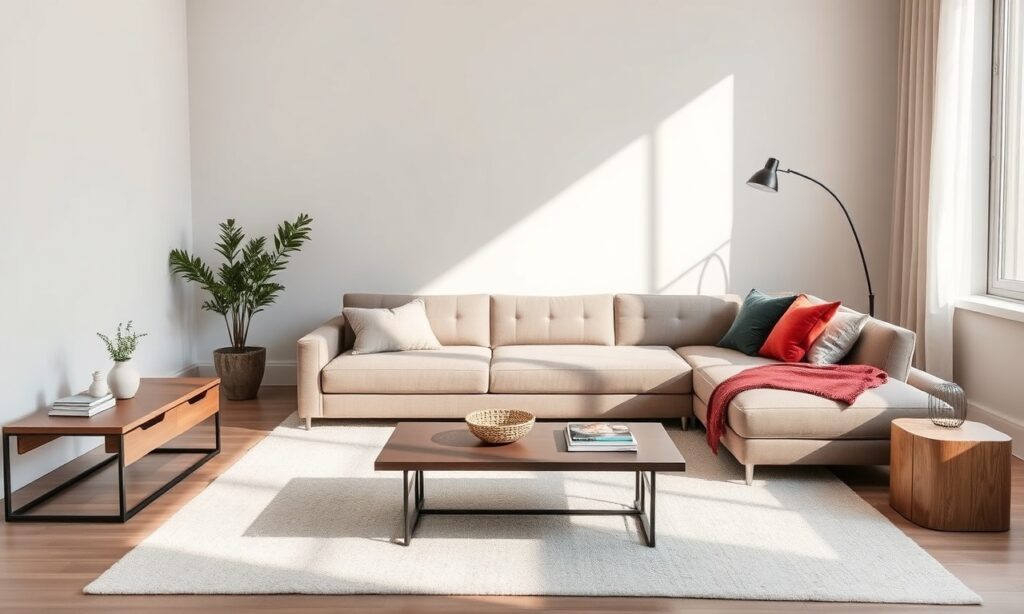
The term “convertible furniture” is a broad umbrella encompassing a vast array of innovative designs. To make an informed decision, it’s essential to understand the distinct categories and their specific applications. Each type offers unique solutions to common spatial challenges, catering to different needs and preferences.
The Versatile Sofa Bed: Beyond the Guest Room Staple
The sofa bed is perhaps the most recognizable form of convertible furniture. However, modern iterations have moved far beyond the lumpy mattresses and awkward frames of yesteryear. Today’s sofa beds are designed with comfort, style, and ease of use as paramount concerns.
- Sofa Beds with Pull-Out Mattresses: These are the classic design, where a mattress is concealed beneath the sofa cushions and pulls out to form a bed. Advanced mechanisms now ensure smoother operation and more supportive mattress options, including memory foam and hybrid constructions. They are ideal for living rooms, dens, or even home offices that occasionally host overnight guests.
- Sleeper Sofas with Integrated Beds: A more integrated design where the bed mechanism is seamlessly built into the sofa’s frame, often folding up behind the back cushions. These can offer a more robust sleeping surface and often have a more refined aesthetic, appearing less like a sofa that *happens* to have a bed.
- Futons: A simpler, often more budget-friendly option, futons typically consist of a metal or wooden frame with a foldable mattress. They can be easily converted from a sofa to a bed by lowering the backrest. While generally less plush than traditional sofa beds, they are excellent for smaller spaces and casual use.
The Transformative Table: From Coffee to Dining and Beyond
In many homes, a dedicated dining room is a luxury of space. Convertible tables offer an ingenious solution, providing essential surfaces for work, leisure, and dining without demanding a permanent footprint.
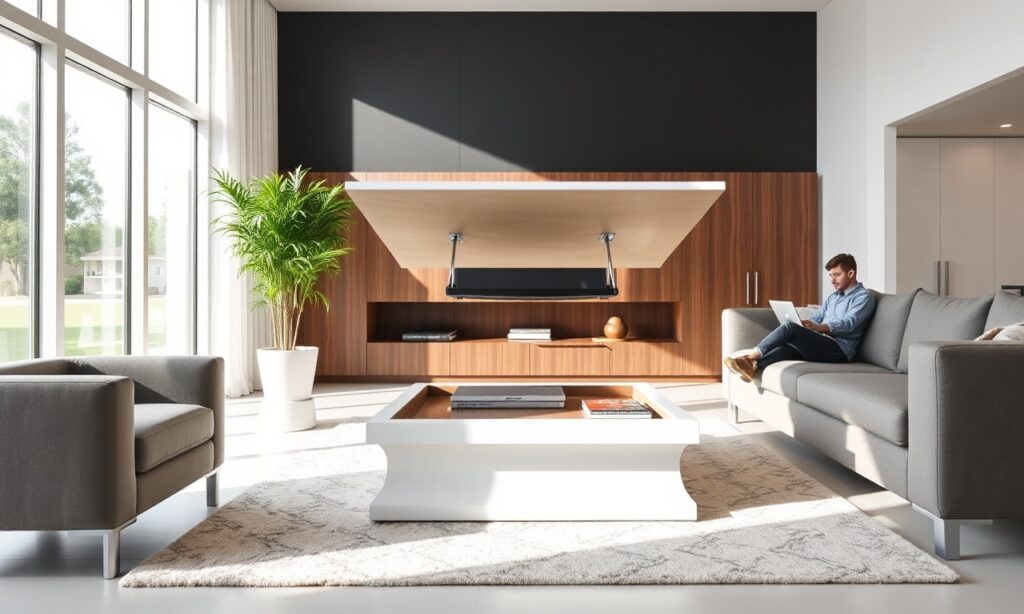
- Lift-Top Coffee Tables: These tables feature a section of the tabletop that lifts upwards and often forwards, revealing storage space and creating a higher surface suitable for dining, working on a laptop, or playing games. They are perfect for maximizing the utility of a living room.
- Extendable Coffee Tables: Similar to lift-top tables, these often have mechanisms that allow the tabletop to expand outwards, providing a larger surface area. Some even transform into full-sized dining tables, making them incredibly versatile for small apartments.
- Nesting Tables: A set of tables of varying sizes that tuck neatly under each other. The largest can serve as a coffee table, while the smaller ones can be pulled out for side tables, extra workspace, or serving surfaces. This design is excellent for flexibility and can be easily stored away when not in use.
The Space-Saving Storage Solutions: Shelving That Does More
Storage is a perennial challenge, and convertible furniture offers creative ways to integrate it seamlessly into your living environment.
- Murphy Beds (Wall Beds): These are perhaps the ultimate space-saving solution. A bed, often a queen or king size, is mounted on a mechanism that allows it to fold vertically into a cabinet or wall unit. When not in use, it completely disappears, freeing up an entire room for other purposes. They are ideal for studios, guest rooms, or multi-purpose rooms.
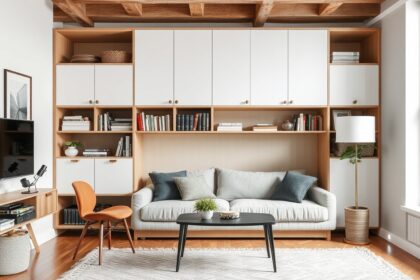
- Fold-Down Desks and Shelving Units: Wall-mounted units that can be folded down to create a desk or display shelving. When not in use, they fold flat against the wall, reclaiming floor space. These are excellent for home offices, craft rooms, or children’s bedrooms where space is at a premium.
- Ottomans and Storage Benches: These pieces serve multiple functions: a footrest, extra seating, and crucially, hidden storage. They are perfect for stowing away blankets, toys, books, or other items, helping to maintain a clutter-free environment.
💡 Expert Insight
Expert Insight: The “Hidden” Functionality is Key
When evaluating convertible furniture, pay close attention to the *transition mechanism*. A smooth, intuitive, and durable mechanism is the hallmark of quality. If a sofa bed is difficult to open, or a lift-top table feels unstable, its “convertible” nature becomes a burden rather than a benefit. Look for gas springs, well-engineered hinges, and robust locking systems. The best pieces feel effortless to operate and secure in all their configurations.
The Art of Selection: Choosing Convertible Furniture That Truly Works for You
The sheer variety of convertible furniture can be overwhelming. Making the right choice requires a thoughtful assessment of your specific needs, lifestyle, and the aesthetic of your home. It’s not just about finding a piece that folds; it’s about finding one that enhances your daily life.
Firstly, assess your primary need. Are you looking to accommodate guests more comfortably? Do you need to create a dedicated workspace within a living area? Or is your main goal simply to reduce clutter and maximize the feeling of open space? Your answer will guide you towards the most relevant category of convertible furniture. For instance, if guest accommodation is paramount, a high-quality sofa bed or a Murphy bed should be your focus. If a home office is essential, a fold-down desk or a lift-top coffee table that serves as a workspace might be ideal.
Secondly, consider the space’s existing layout and dimensions. Measure meticulously. A piece of furniture might look fantastic in a showroom or online, but it needs to fit seamlessly into your home. For sofa beds, ensure there is enough clearance to fully extend the bed without blocking doorways or other furniture. For wall-mounted units like Murphy beds or fold-down desks, verify that the wall can support the weight and that the operation mechanism has sufficient swing space. Open-plan living areas benefit immensely from pieces that can transition discreetly, maintaining the room’s primary function until needed.
Thirdly, prioritize quality and durability. Convertible furniture often involves more moving parts than static furniture, making build quality even more critical. Look for solid wood frames, high-density foam for upholstery, and robust metal mechanisms. Read reviews, check manufacturer warranties, and if possible, test the furniture’s functionality in person. A poorly constructed convertible piece can become a source of frustration rather than a solution. As a general rule, invest in the best quality you can afford, as these pieces are often subjected to more frequent use and mechanical stress.
Fourthly, don’t sacrifice style for function. The best convertible furniture blends seamlessly into your décor, enhancing its overall appeal. Many manufacturers now offer convertible pieces in a wide range of styles, fabrics, and finishes. Whether your aesthetic is minimalist, mid-century modern, or bohemian, you can find convertible furniture that complements your existing design. Remember that a well-chosen piece can elevate the look of a room, rather than detract from it.
Integrating Convertible Furniture: Tips for Seamless Design and Functionality
Once you’ve selected the right pieces, the next step is to integrate them thoughtfully into your home. The goal is to create a space that feels cohesive and intentional, where the furniture’s dual nature enhances, rather than complicates, the living experience.
One of the most effective strategies is to design around the convertible function. If you have a sofa bed, consider how its appearance changes when it’s set up as a bed. Ensure that bedding can be stored easily and accessibly, perhaps in a nearby ottoman or a dedicated storage bench. For lift-top coffee tables, think about how you’ll use them: will they primarily serve as a dining surface, a workspace, or both? Arrange seating and other furniture to accommodate these different uses comfortably.
Strategic placement is also key. Position convertible pieces where their transformations will be least disruptive. For example, a Murphy bed might be best placed against a wall that isn’t the primary focal point of the room when the bed is down. A fold-down desk could be situated in a corner or along a less trafficked wall, allowing it to disappear without dominating the room’s layout. Consider the flow of traffic and how the furniture’s various configurations will impact movement within the space.
Embrace multi-functionality in other elements. Complement your convertible furniture with other space-saving solutions. For instance, use nesting tables alongside a convertible sofa, or choose ottomans with hidden storage to house extra bedding for a sofa bed. Built-in shelving units can also be designed to incorporate fold-down desks or hidden storage compartments, creating a unified and highly efficient system.
Finally, maintain a sense of intentionality. Convertible furniture thrives when it’s part of a well-organized space. Regularly declutter and ensure that all components of your convertible pieces (like extra cushions, mattress protectors, or bedding) have designated storage spots. This prevents the furniture from becoming a source of clutter itself and ensures its functions are always readily available and easy to deploy.
⚠️ Pro-Caution
Pro-Caution: Mechanism Wear and Tear
While modern convertible furniture is built to last, frequent or rough use of the mechanisms can lead to wear and tear over time. Always operate the furniture according to the manufacturer’s instructions. Avoid forcing parts, and ensure that obstructions are cleared before attempting a conversion. For sofa beds, regularly check the mattress and frame for any signs of strain. For lift-top tables, be mindful of the weight distribution when raising or lowering the top to avoid excessive stress on the hinges. Regular inspection and gentle handling will significantly extend the lifespan of your investment.
The Future of Living: How Convertible Furniture is Shaping Modern Homes
The evolution of convertible furniture is intrinsically linked to broader societal shifts – urbanization, smaller living spaces, and a growing desire for adaptable, multi-functional environments. As cities continue to grow and housing becomes more expensive, the demand for intelligent space-saving solutions will only intensify. This trend points towards a future where homes are not static structures but dynamic, responsive living environments.
Innovations in materials science and engineering are constantly pushing the boundaries of what convertible furniture can do. We are seeing lighter, stronger materials that allow for more fluid and intuitive mechanisms. Robotic integration is also on the horizon, with some high-end pieces offering automated folding and unfolding capabilities, transforming rooms at the touch of a button. The aesthetic appeal is also improving dramatically, with designers increasingly focusing on sleek, minimalist designs that integrate hidden functions so seamlessly that the furniture appears to be purely decorative until its secondary purpose is revealed.
Furthermore, the concept of “flexible living” extends beyond just furniture. It encompasses integrated smart home technology, modular architectural elements, and a mindset that prioritizes adaptability. Convertible furniture is a tangible manifestation of this philosophy, empowering individuals to curate living spaces that truly serve their evolving needs. It represents a move away from the traditional notion of fixed rooms and towards a more fluid, personalized approach to home design. As this category matures, we can expect even more sophisticated, aesthetically pleasing, and highly functional convertible solutions that will continue to redefine the possibilities of compact living.
Key Takeaways
- Convertible furniture is essential for maximizing space in modern, often smaller, homes.
- Benefits extend beyond space-saving to include cost-effectiveness, sustainability, and lifestyle enhancement.
- Key categories include versatile sofa beds, transformative tables, and space-saving storage solutions like Murphy beds and fold-down desks.
- Selection requires careful consideration of needs, space dimensions, quality, and aesthetic integration.
- Thoughtful integration, strategic placement, and complementing with other multi-functional elements are crucial for success.
- Quality mechanisms and proper care are vital for the longevity and functionality of convertible pieces.
- The future of convertible furniture lies in continued innovation, smoothly connect, and its role in shaping adaptable, modern living environments.
Frequently Asked Questions
What is the most important factor to consider when buying convertible furniture?
The most crucial factor is the quality and durability of the conversion mechanism. This is the core of its functionality. A poorly engineered or flimsy mechanism will quickly become a source of frustration and will likely fail prematurely, negating the benefits of the furniture. Always prioritize smooth operation, robust construction, and secure locking features in all its configurations.
Are convertible furniture pieces generally less comfortable than traditional furniture?
Not necessarily. While early iterations may have compromised on comfort, modern convertible furniture has made significant strides. High-quality sofa beds often feature advanced mattress technologies and supportive frames, offering comfort comparable to traditional beds. Similarly, convertible tables and desks are designed for ergonomic use. The key is to choose pieces from reputable manufacturers known for prioritizing both function and comfort.
How do I choose the right size and style of convertible furniture for my home?
Start by measuring your space meticulously and considering how the furniture will function in its various states. Visualize the flow of traffic and ensure there’s ample room for conversion and use. For style, look for pieces that align with your existing décor. Many brands now offer a wide range of designs, from minimalist to traditional, so you don’t have to sacrifice aesthetics for functionality. Reading reviews and looking at customer photos can also provide valuable insights.
Is convertible furniture a good investment for small apartments?
Absolutely. Convertible furniture is an excellent investment for small apartments as it allows you to maximize the utility of every square foot. It enables rooms to serve multiple purposes, effectively giving you more living space without the need for additional square footage. Pieces like sofa beds, lift-top coffee tables, and wall-mounted desks can transform a studio or one-bedroom apartment into a highly functional and comfortable home.
What kind of maintenance does convertible furniture require?
Maintenance largely depends on the type of furniture. For sofa beds, regularly check the mattress for wear and tear and ensure the folding mechanism is clean and lubricated if necessary. For lift-top tables, wipe down surfaces regularly and be mindful of weight distribution. Wall beds may require periodic checks of the spring or gas-lift mechanisms. Always refer to the manufacturer’s specific care instructions to ensure the longevity and optimal performance of your convertible furniture.
Final Recommendations
Embracing convertible furniture is more than just a space-saving strategy; it’s a commitment to a more dynamic, efficient, and adaptable lifestyle. By understanding the diverse options available, prioritizing quality and thoughtful design, and integrating these pieces intelligently into your home, you can unlock hidden potential and transform your living space into proof of modern ingenuity. Don’t view convertible furniture as a compromise, but rather as an elevation of your living experience, a sophisticated solution that empowers you to live larger, no matter the square footage.
See also: convertible furniture